"I take vacation to go work"
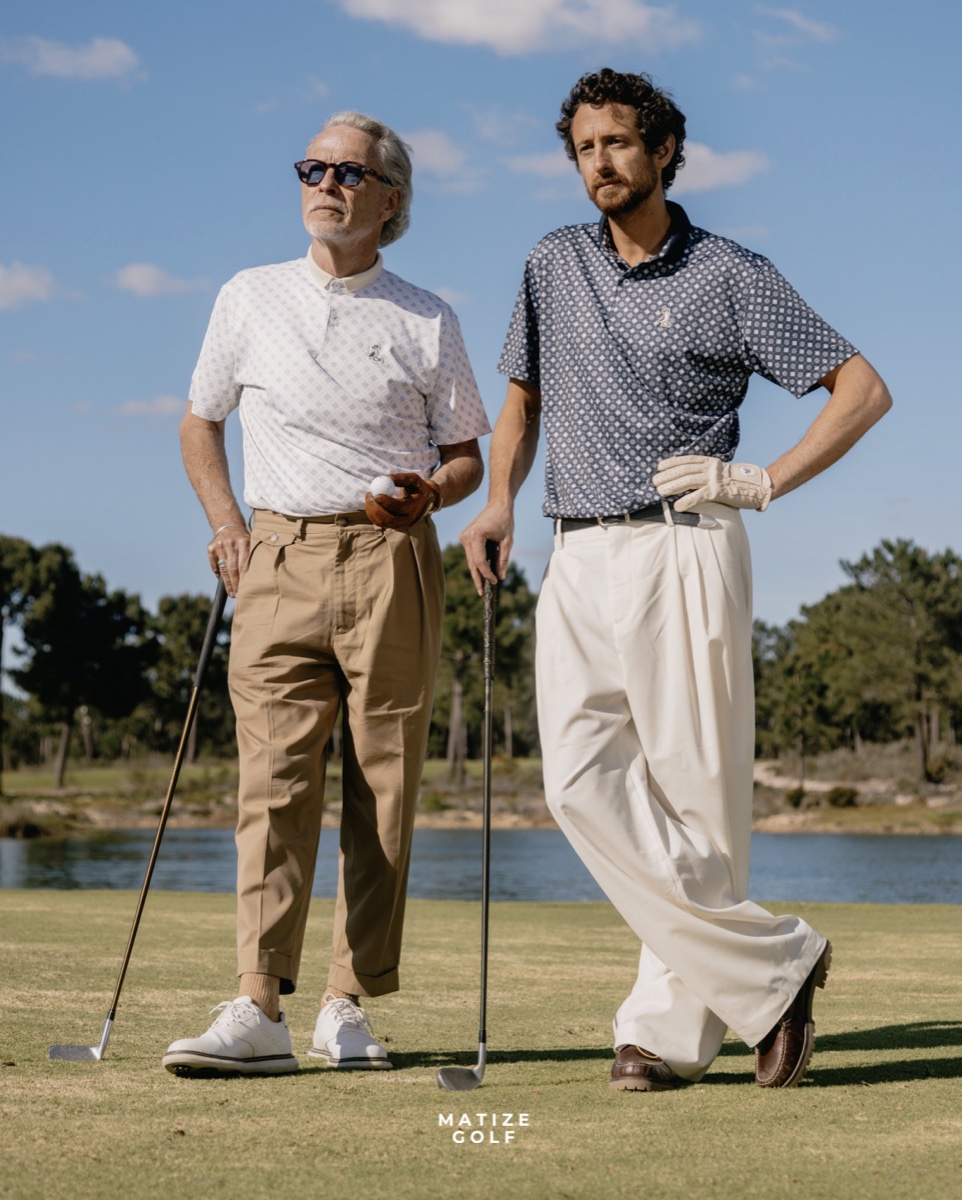
MATIZE makes golf apparel in the north of Portugal, sells it through lifestyle shops in Porto and Lisbon, and spends a week every January and June in a Paris showroom. One of its co-founders still works a full-time job, using his annual leave to work on the brand. Ask him about his biggest mistake, and his honest answer is simple: getting into it in the first place.
José Furtado grew up playing golf in Portugal, went to North Carolina State, played professionally for a couple of years, and then stayed in America for the better part of seventeen years. By the middle of the last decade, he was in Los Angeles working for a surf brand, and he was noticing something on the golf course.
"There were a bunch of folks that really took up on golf that weren't the traditional people that you'd see on a golf course," he says. Surfers. Skaters. Designers. People who arrived with their own idea of what you wear to play. He was turning up in corduroy shorts and a light cotton surf polo because that was what he wore all day, and it was around then that he first thought about making golf clothes with a different attitude.
That was 2016, maybe 2017. He didn't do anything about it. "I didn't have the right setup at the time. I got pushed into other projects."
- Started
- Idea in 2016–17, relaunched during covid
- Based
- Northern Portugal
- Makes
- Apparel — knitted and woven shirts and polos, shoes from the next collection
- Team
- Three founders and a handful of contractors
- Site
- matizegolf.com
COVID fast-tracked his return to Portugal
The thing that changed wasn't a decision. José was in France when covid hit. He got back to Portugal, and then the flights stopped, and the world stopped. He didn't know whether he was staying or going.
"All my family was here in Portugal. So, at the time, I decided to stay, at least for a while."
He restarted his life, and the golf idea came back off the shelf. His family has been in textiles for over eighty years. He had spent his American career in and around clothing. The pieces were, finally, in the same country.
It started as a supply chain problem
Here is the part that doesn't appear in any brand story, including their own.
MATIZE did not launch as a design-led brand with a point of view. It initially launched because Brexit and COVID had broken the supply chain in Europe. Most golf brands serving the continent were based in the UK and Portuguese golf courses were suddenly waiting six to eight months for stock they had pre-ordered. Tourists were still arriving because golf was one of the few activities that you could still do during COVID. The shops had nothing to sell them.
José Furtado, Marcos Fonseca and Tiago Osório could turn a capsule collection around in weeks, in a factory twenty minutes down the road. So that is what they did — course logos, a few styles, whatever pattern the shop picked.
"Our initial approach was very much cash-flow oriented. We produced and then we delivered."
It funded everything that came after, and it put the brand into golf courses across Portugal before it had any right to be there. It is also, José is clear, not what he was trying to build. The brand he actually wanted — Mediterranean, Atlantic, made entirely at home — had to be paid for first.
They still made the classic first mistake anyway.
"We spent a lot of money on inventory, and we couldn't move a thing, because we had no community. We had no DTC and only a few stores to buy it."
The contract work is what stopped that being fatal. They had somewhere to put product while they worked out who they were.
The rule, and what it costs
Everything MATIZE sells is made in Portugal, nearly all of it within about 15 kilometres of one town. That isn't a marketing line so much as a constraint they've agreed to live inside.
If I don't produce it in Portugal, I'm not going to produce it anywhere.
Most brands say something like this. Fewer can tell you what it has cost them. José can: golf gloves.
He wanted to make them. He found a Portuguese supplier — a good one, making gloves for bull riding and horseback riding — and the leather was simply too thick. Golf gloves need cabretta, thin enough to feel the grip through, and the people who do that well are in Indonesia and Taiwan.
So MATIZE don't sell golf gloves. They sell what Portugal is genuinely excellent at making: knitted and woven shirts, polos, and from the next collection, shoes.
Why the good stuff isn't in the pro shop
Ask anyone who follows independent golf brands why they never appear in club shops and you'll get an answer about taste — that pro shops are conservative, that buyers won't take a risk. José sells to both independent stores and golf courses, and he says that isn't 100% true.
Courses sign minimum-spend agreements with the big brands. A shop might have to commit €7,000 just to open an account, and €20,000 to unlock a discount worth having. And the deal goes well beyond apparel — it can cover range balls, the balls sold in the pro shop, shoes, staff uniforms, and sometimes even clubs.
"After a club spends fifty grand on a brand, they kind of have to commit to it exclusively. The brand is providing uniforms for all the staff, range balls, and several other perks. For smaller brands, that's just too hard to compete with."
By the time that's paid for, the budget for a small independent collection is gone.
It's not because the golf course doesn't believe these products will sell in their store. A lot of the time, they do. It's just their hands are tied.José Furtado, Co-founder, Matize
What works for MATIZE instead is independent retail — no minimum spend, no exclusivity clause, just someone deciding they want it on the rail.
What it takes
Four years in, MATIZE is three people and a handful of contractors. There are three drops a year — February, April and September — with collaborations in between. They work with independent fashion stores and golf pro shops, dress the staff at private courses across Portugal and Spain, partner with the Portuguese national team, and show in Paris.
And José still has a full-time job. He thought about going all-in on MATIZE. Then he got promoted.
So the work happens around the edges — early mornings, late nights, whatever time is left. And he is unusually honest about what that means.
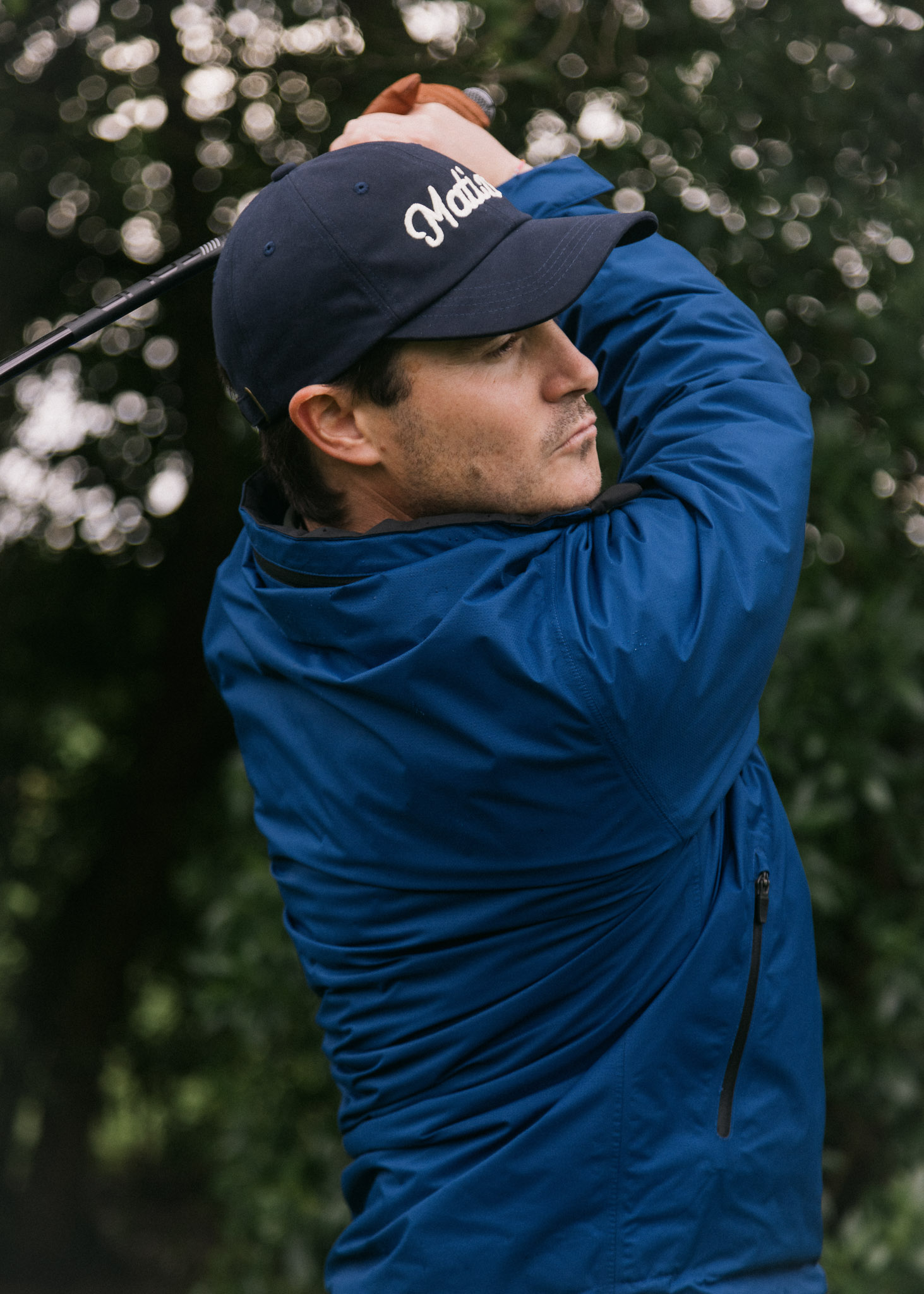
I take vacation to go work. I rarely take vacation to relax.
There are sleepless nights, which is where most of the ideas for the next collections or campaigns arrive. There is the constant, unglamorous churn of a small brand — the ad agency that can't explain why orders come from the places he spends nothing on, the client he had to say no to last week because there are thousands of polos to deliver first.
Ask whether it gets easier and the answer is no, but the useful part is what he's done about it.
"One of the things that's really important is that you set yourself limits. I need to go play golf, or I need to go spend time with my wife, or I need to go to dinner with my friends and not think about this. Because otherwise, it'll consume you."
There's never a time when you're like, my work is done, I'm going to have a beer. You might as well have beers while you're doing the work, because you're never going to have that time to enjoy.
The biggest mistake
We asked him for it directly, near the end. He laughed first.
"The funny answer would be to get into this in the first place. Because I spend a lot of money, and it's taking definitely a toll on me."
Then he took it seriously, and what came out was the closest thing to advice in the whole conversation. If you don't have the dedication this needs, he says, spend the money on something else. Invest it in something else. It will ask for your holidays and your evenings, it is hard when you have a family and responsibilities, and nobody is promising you anything at the end of it.
"You have no promise that you will reap any benefits whatsoever."
He is not, to be clear, unhappy about any of this.
I could die today and I would be happy with my life, because I decided to make something. I want to make something with a purpose. I'm not in this game to reap financial benefits right now — I want to make something that will leave a legacy.
Six years ago, he was stuck in an airport queue that kept collapsing, in a country he hadn't lived in for seventeen years, with an idea he'd already shelved once.
Now there are three collections a year, a factory twenty minutes down the road, and a job he takes his holidays from.
This is what it takes to build a golf brand.
Quotes edited for length and clarity. Images supplied by the brand.
No payment was made or received for this interview.