“The hardest day at the Salty Golfer will still beat the best day of working for someone else”
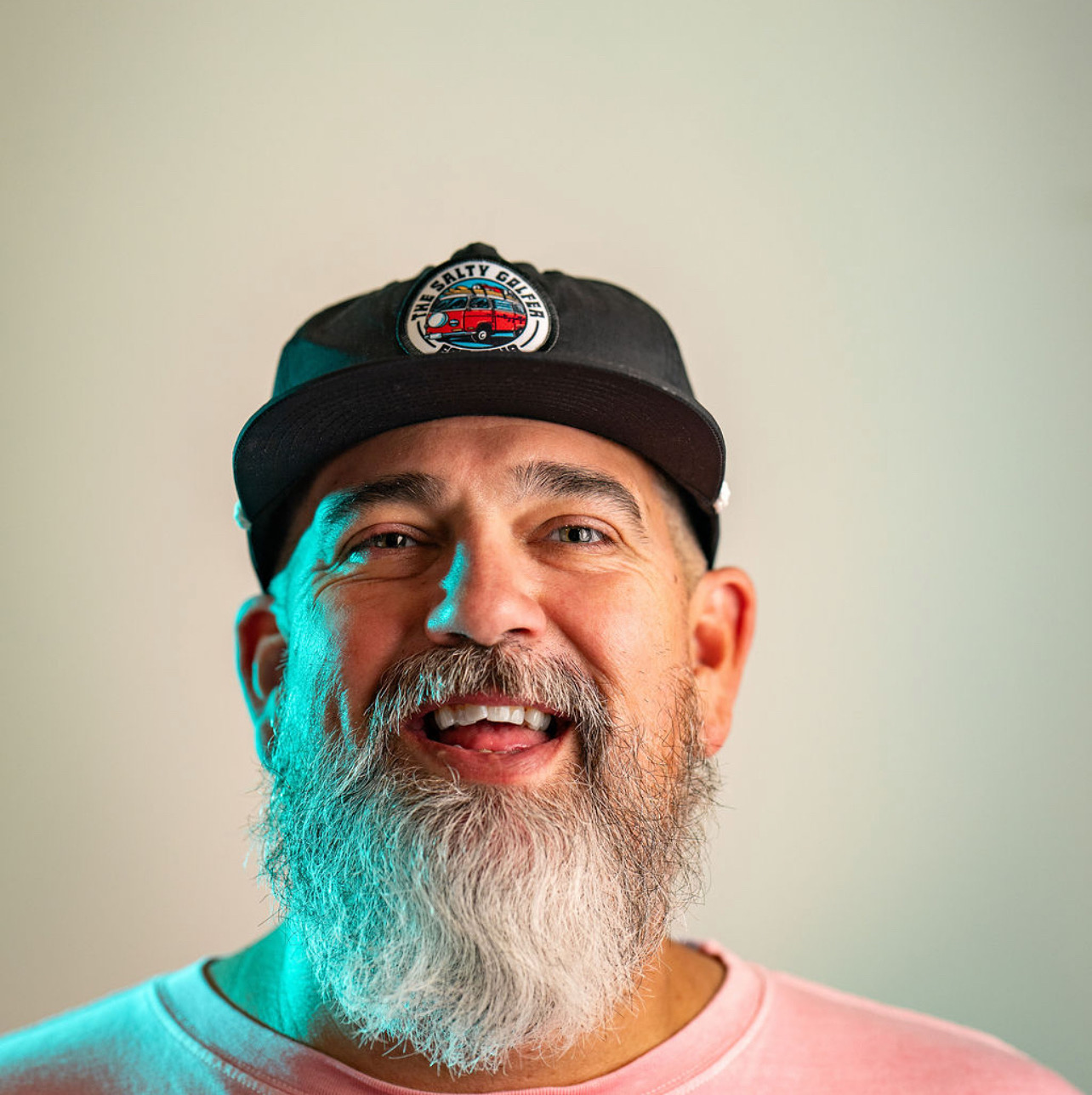
Wes Loman is six foot eight, two hundred and ninety pounds, with a white beard, and by his own account he does not look like a golf influencer. He runs the Salty Golfer from a warehouse in Myrtle Beach, South Carolina, and he is, in his words, the salesman, the shipping department, the website and the person who chases the invoices.
- Founder
- Wes Loman, known to everyone as Salty
- Started
- Around 2019, as an Instagram page
- Based
- Myrtle Beach, South Carolina
- Makes
- Golf and beach lifestyle clothing: polos, tees, hoodies, hats, headcovers and towels
- Team
- Wes, with business partners Jacob and Clayton
- Stockists
- Ten to fifteen pro shops, with close to fifty planned for 2027
- Site
- thesaltygolfer.com
Three holes on a Friday
Before any of this, Wes sold medical linen. He supplied hospitals, surgery centres and dentists with everything from blankets to lab coats, across a patch that ran from Savannah, Georgia to Fayetteville, North Carolina. Myrtle Beach sat in the middle, three and a half hours from each end. His family had always holidayed there and owned property there, so the move was an easy one.
Then covid arrived, and the best part of the job went with it. He had been the one taking people to dinner and shaking hands. Now everything was a video call.
“This is just not who I am. I like being amongst it. I like giving hugs and shaking hands and asking people how they’re doing.”
South Carolina, by his recollection, barely shut golf at all. So he took his phone to the course. On Wednesdays and Fridays he would go live on Instagram and play three holes, and people who were stuck indoors watched.
“People would live vicariously through my Instagram Live. They were watching this eight-handicap play golf in Myrtle Beach, and they couldn’t do it.”
He is an 8.4 these days. Some days that is a seventy-five, some days a ninety-five. I guess we all know that feeling….right?
Golfer for hire
The messages started coming. Never been to Myrtle Beach, seventy-odd courses, where do I even start? The thing about the place, he explains, is that if you turn up as a single you will be paired with strangers, and plenty of visitors do not love that idea.
So he became a golfer for hire. He would book it, play it, and make the strangers feel less strange. He had got to know the superintendents and head pros by then, so he would wander the course taking pictures, tag the club, and send the person photos of their day.
“The whole goal was: if I get you here, I’m going to show you a really good time. That way you come back.”
It turned into hosting. Three or four honeymoons. Twenty-odd bachelor parties. Golfers from Britain and South Africa. At the end of each trip, everyone signed a pirate flag with the brand’s logo on it and did a shot of rum, and he filmed it. He has three of those flags in the shop now, signed on both sides.
“We were just going to throw a party and golf was going to get in the way.”
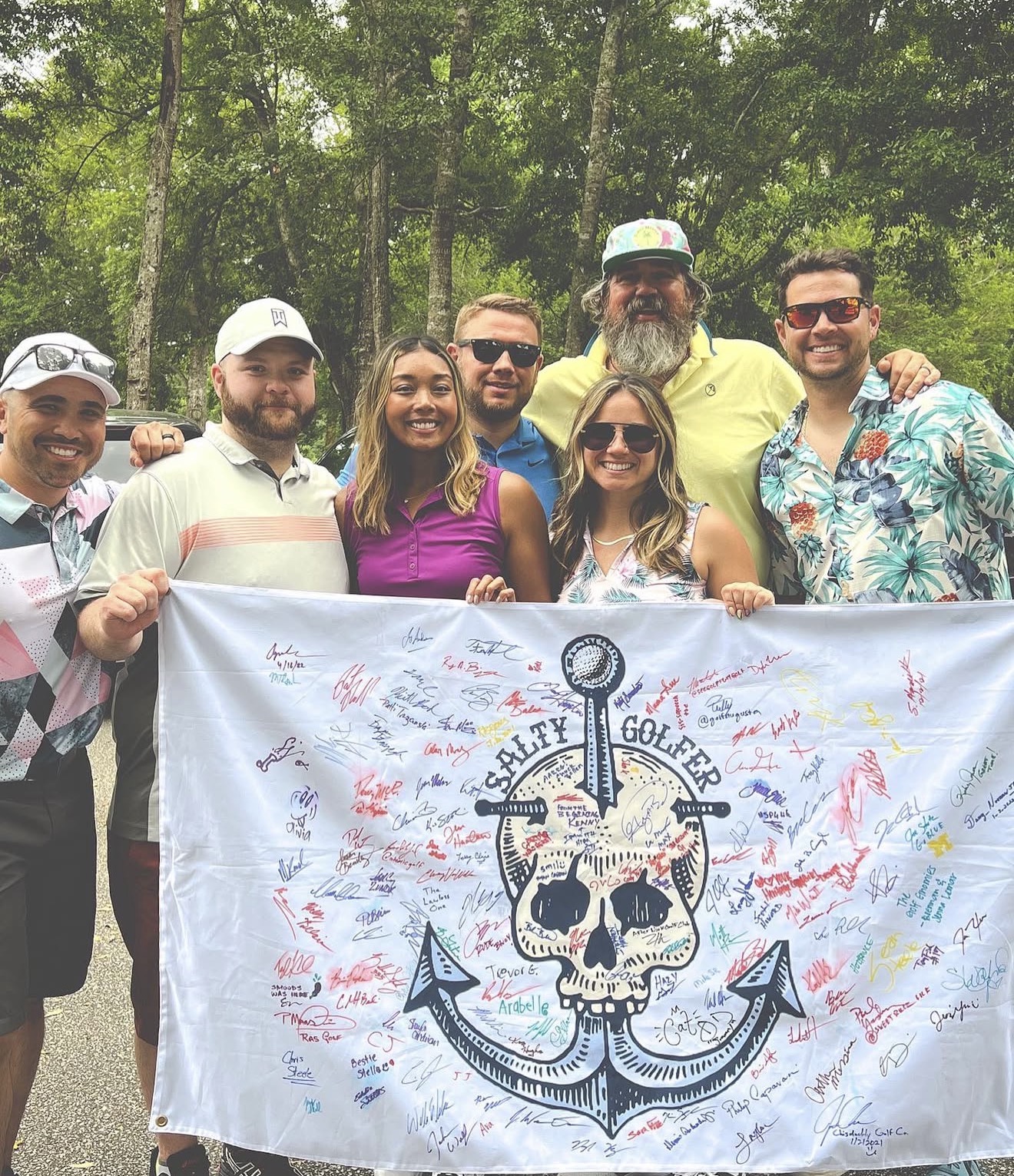
And at the end of those trips, people kept saying the same thing. I wish there was something to buy to remember this by.
Old North State
The idea was not new to him. He and his wife Katie had already run a clothing side hustle, with heat-seal machines, embroidery machines and nautical-themed designs. They were both working full days at their jobs and had five children under thirteen.
One night, getting ready for an event at two in the morning, they looked at each other.
Katie said she didn’t want to do this anymore.
“I said, I’m so glad you said that, because I don’t want to do this anymore either.”
They sold everything to a buyer from Virginia Beach, meeting him halfway to hand it over. The Instagram page, then called Old North State Clothing Company, had about fifteen hundred followers. He offered it to the buyer, who wasn’t interested. It sat dormant for nearly a year.
It was Katie who suggested the name. You love the ocean, you love golf, you love taking pictures of both. Why not just call yourself the Salty Golfer?
The “salty” is water, the ocean and anything nautical. People assume it means a bad attitude. He says it is the opposite.
“I’m probably one of the most chill guys you’ll ever meet.”
My face, then a Kraken
He had no idea how to make a product, so he messaged an artist in Florida whose work he admired, who has drawn for brands including Howler Brothers and FootJoy. Wes explained the idea and braced himself for a bill he could not afford.
“He said, nah, man. First one’s on me.”
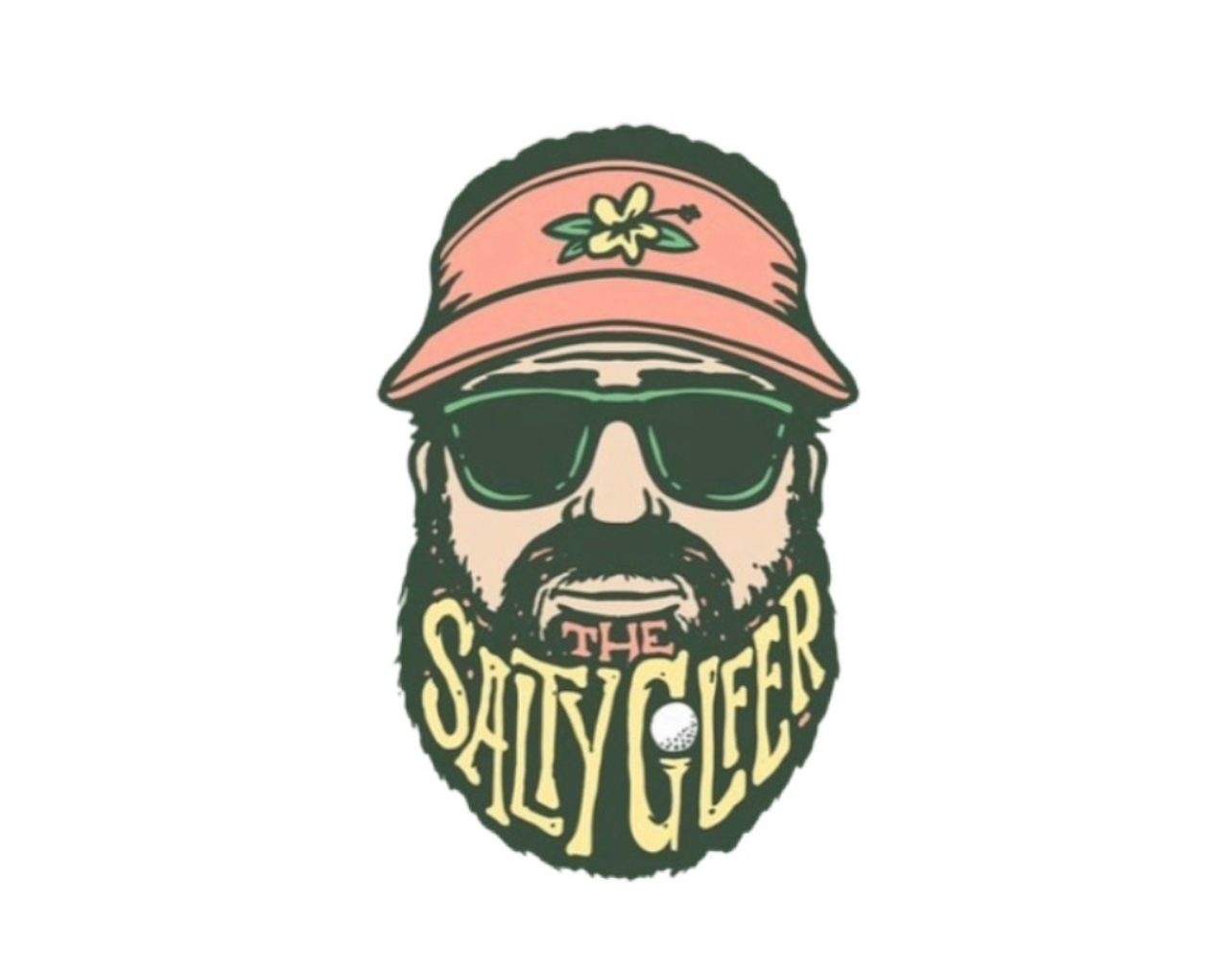
The first piece of art was Wes’s own face, beard and all. It is the neon sign on the wall behind him now. They put it on towels, headcovers and T-shirts and sold it as a bundle.
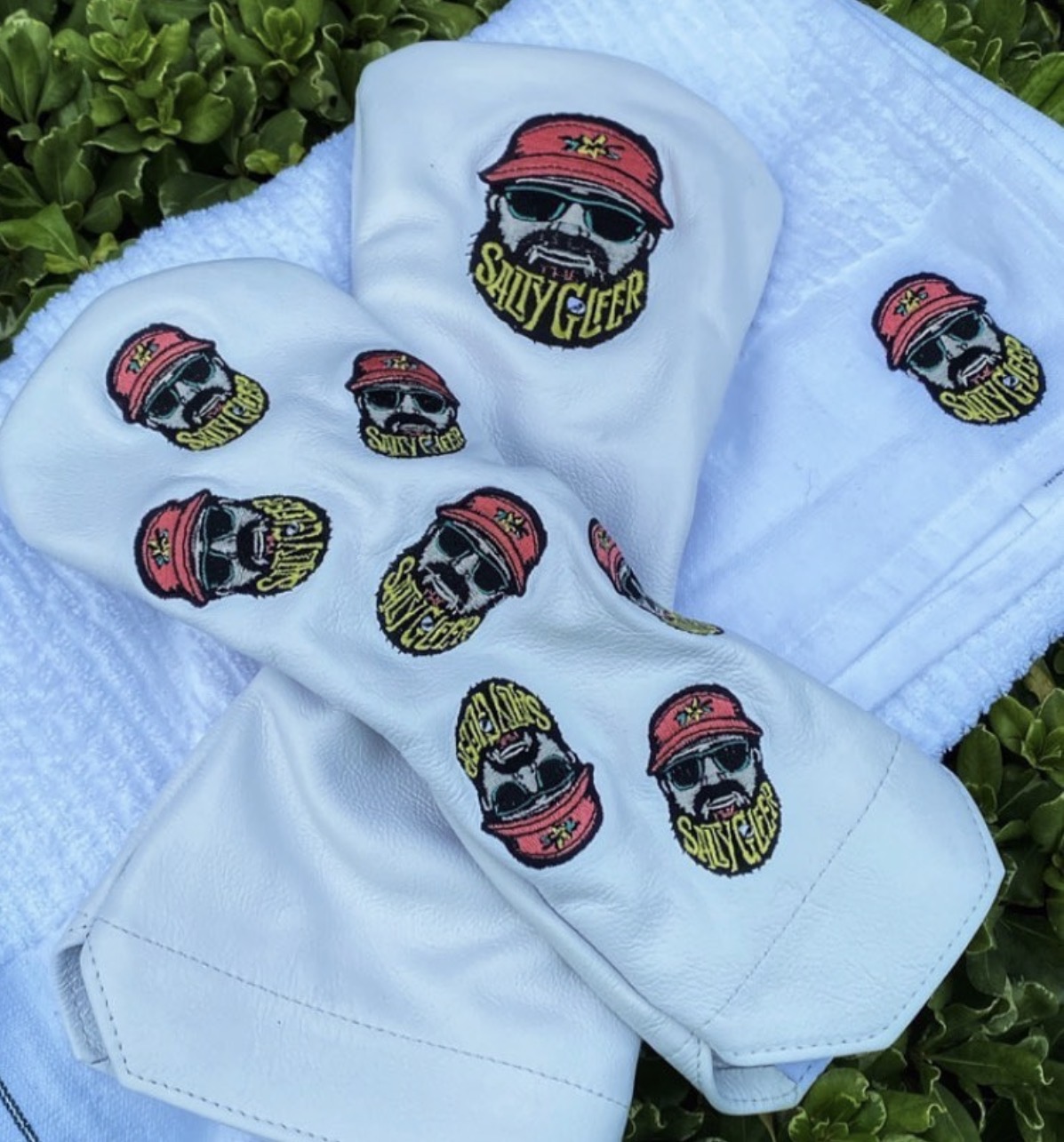
Drops were seventy-five or a hundred pieces, announced a few days ahead, with no returns. They sold out in twenty-four to forty-eight hours. The rule is still the same.
“If you’re too late, maybe check eBay in a couple of weeks.”
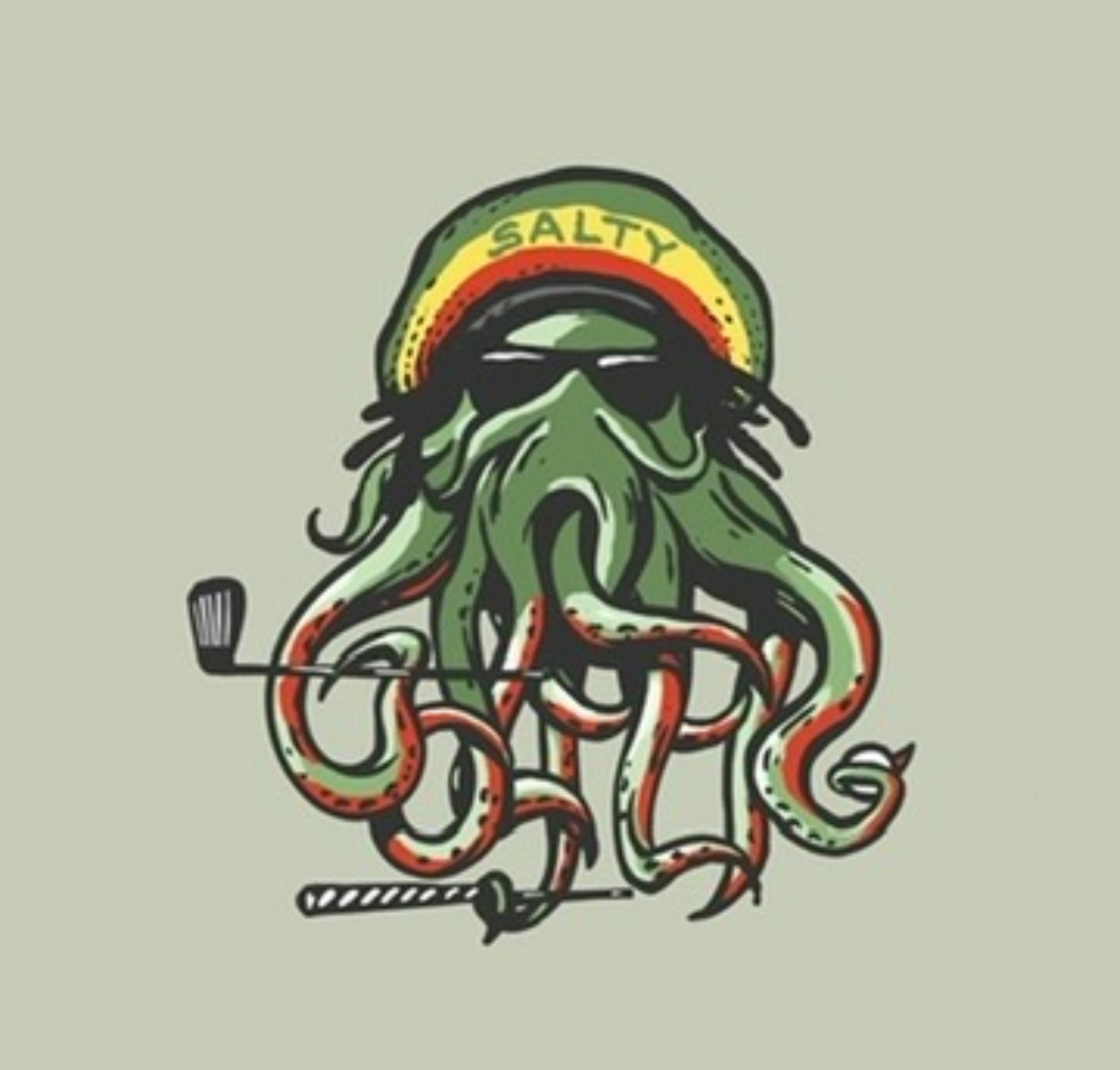
He takes it as a badge of honour. He has even bought back some of his own originals for the archive, including the skull-and-anchor headcover, for more than the original price.
Not the influencer
He did not want to run a clothing company. He wanted to be the guy who films himself playing golf and gets invited to events. For a while he was.
Then he looked at himself honestly. He was in his mid-forties, six foot eight, with a beard gone white, in a game full of twenty-two-year-olds who hit it four hundred yards.
“My body does not scream golf.”
The problem was that the name, the community and the idea were all good. How do you stop selling hospitals linen and make a living for your family around the game you love? The answer was the thing he had been avoiding.
He took it personally at first. The answer was a full apparel company.
“Now we are a full-blown apparel company. And it’s been the hardest thing I’ve ever done in my life. And we’re not out of the woods yet.”
What it costs
If someone asks him whether to start something, his first question is about home.
“If Katie and my girls were not in a hundred percent, don’t start it. There will be days that you don’t see them. There will be long nights where you miss a ball game or a family function, or you have to choose between going and trying to make some money or going to a family event.”
Time is what it has cost him. The Salty Golfer is the first thing he thinks about when he wakes up and the last thing when he goes to bed.
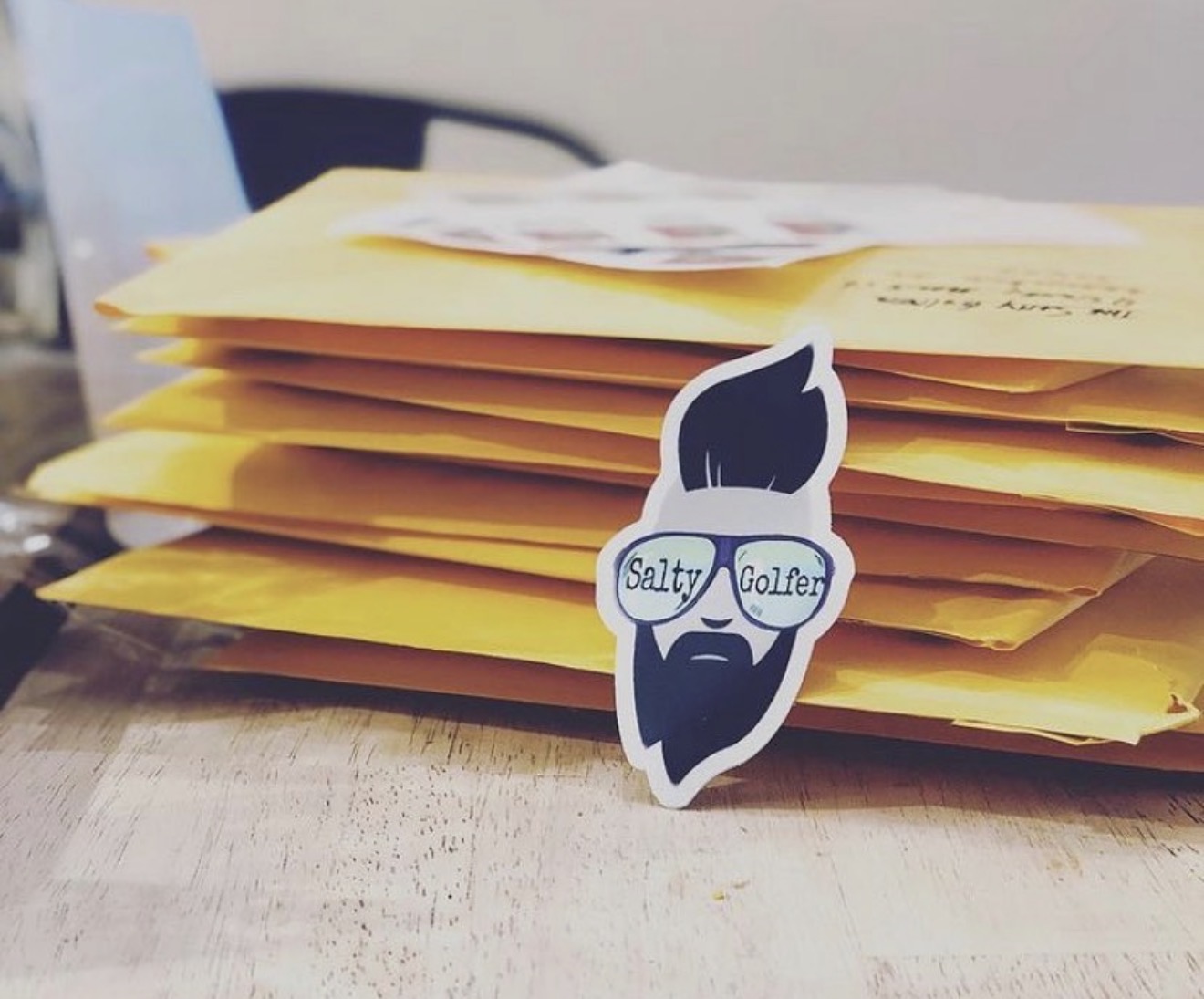
In the early days his daughters were the team. They set up events, ran the till and handed out stickers. He admits he made them miss school to travel to a few of them, because he could not afford to pay anyone.
Now he can. His youngest runs the point-of-sale system at events, and is good at it. She will tell a customer the T-shirt over there would look good with that too. Sometimes his girls turn up at the shop unprompted, saying they were just passing. Something he is super proud of.
“When your kids come up to you and tell you they’re proud of you, I’m not sure there’s a better feeling in the world.”
He answers every customer email and every DM himself, and he says that is getting harder as the brand grows. “It’s hard to keep that garage band feel.”
The hardest day at the Salty Golfer will still beat the best day of working for someone else.Wes Loman, Founder, The Salty Golfer
Inventory is the devil
For the first stretch, the three partners bought what they liked. Wes dresses streetwear, Jacob dresses country club, and Clayton is, in Wes’s words, a rebellious country-club kid who surfs. Between them they bought a very large number of T-shirts.
“We bought too many. We didn’t know what we were doing with inventory.”
About a year ago they sat in a room and looked at each other.
“I don’t think we’re going to be able to do this much longer. There’s just not enough money coming in.”
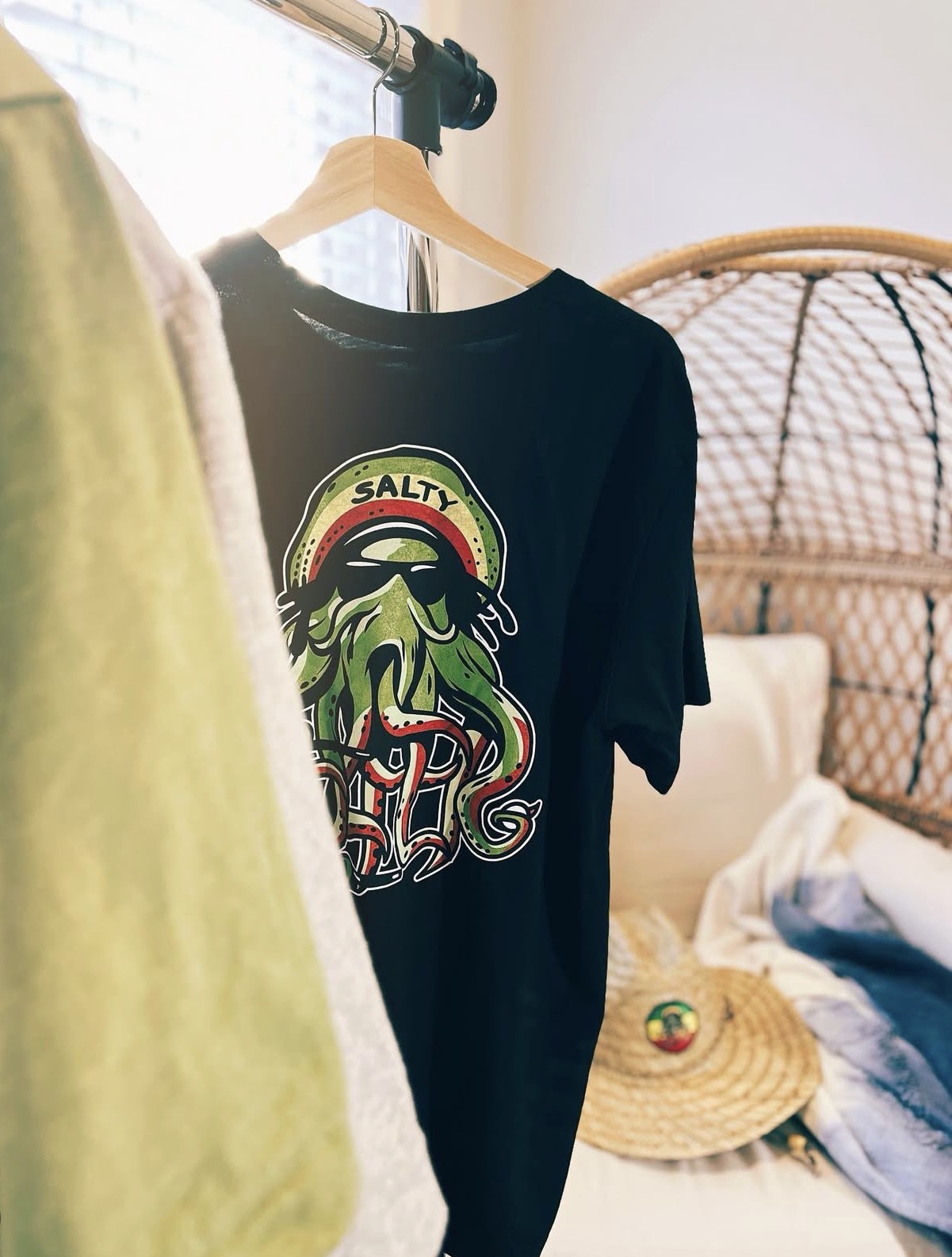
What saved it was a T-shirt sale. Every shirt went to ten dollars. After the printing and the logo work, each one cost them a bit over nine, which left roughly a dollar twenty-five. They ran it for three weeks and sold around four hundred shirts in the first two.
“Not a lot. But it kept the doors open and it kept the bills paid, and it gave us time to reevaluate how we did things.”
Inventory, he says, is the devil, and anyone who says they have it figured out is lying. But the way round has now flipped. Because they sell to pro shops, they take orders off samples first and then place the big order knowing what they need.
He has opinions on price. He has done the research, it took a year and a half to find the right factories, and some of them make clothes for the big names. He thinks a good polo can live between about sixty-five and eighty-five dollars. Early on he wanted to sell everything at sixty, to move it. Jacob stopped him.
“We’re better than sixty bucks. Our brand is better than sixty bucks.”
There were some knockdown, drag-out arguments in the warehouse. He loves that about the team.
Filling holes
Getting into pro shops taught him something nobody had told him. Shops plan their buying a long way ahead. When he first walked in with product, hoping to hustle a sale, they had ordered their spring stock the previous September. In the golf wholesale world there are really two buying seasons, and the one for spring runs from the end of September to early November.
So for a year he became what he calls a need-filler. A shop would run out of something and call. He would drive up and deliver four of this and three of that himself, no minimums and no order too small.
“That’s how we moved product. That’s how we pivoted.”
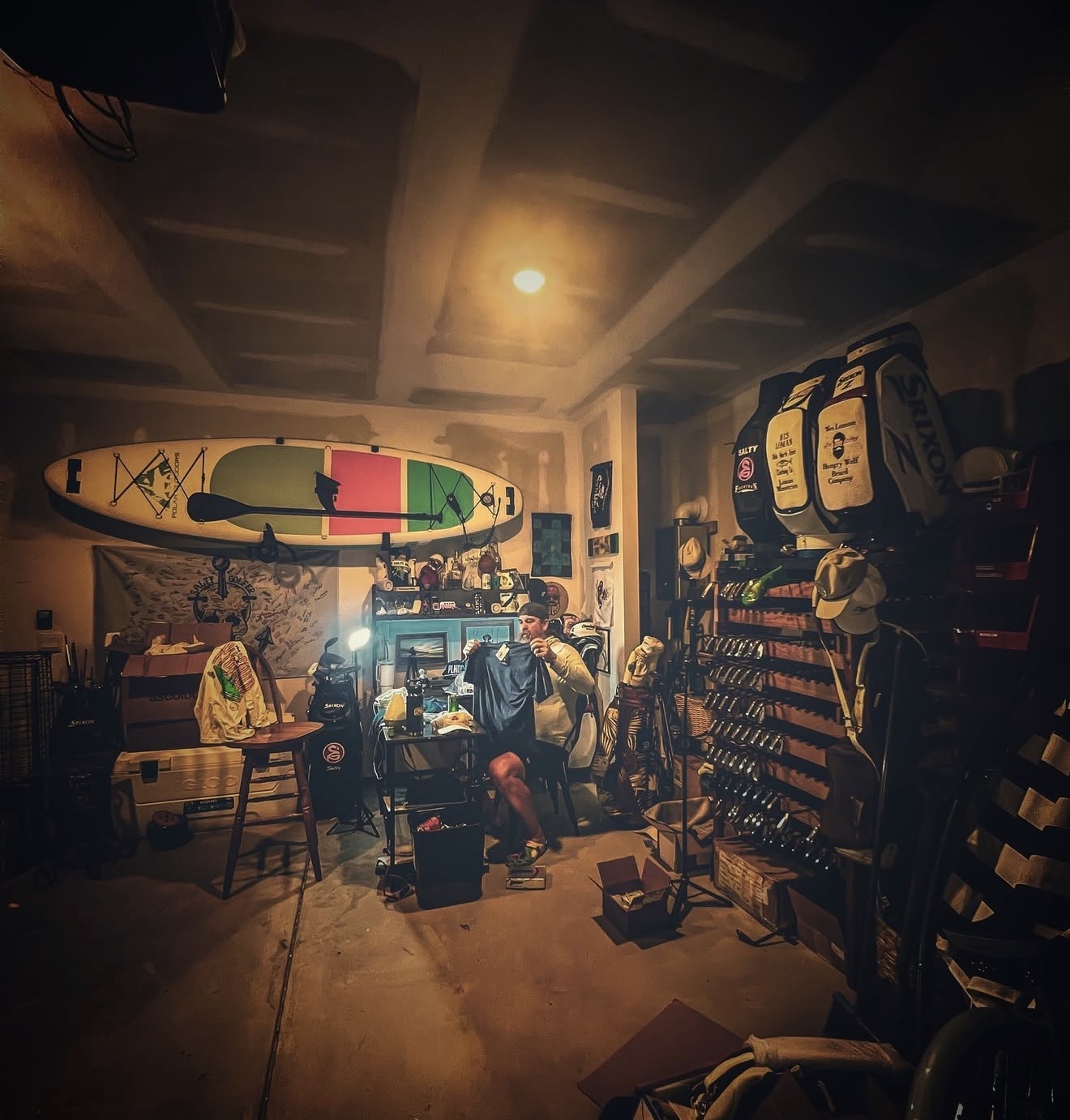
Now he books appointments, visits head pros and greenkeepers, processes web orders on Tuesdays and Thursdays, and flies a drone on the pretty days.
The hardest part of wholesale is not the selling. It is what comes after.
“You’ve got our product, it’s been thirty days, and we still haven’t been paid. Not only am I the salesman, I’m also accounts receivable. And I’m also the face of the brand.”
These are people he knows personally, which cuts both ways. They want him to do well, and he doesn’t want to ruin it by being heavy-handed.
“I don’t want to turn into Blackbeard and pillage this club shop for not paying me.”
“Not yet”
He believes there is room for independent brands in pro shops, but not if you take the first no.
Pro shops, he says, are often stuck in their habits. It’s easier to reorder the same big brand they have bought for fifteen years than to bring in somebody new. What helps is a membership that asks for the brand by name, and a younger generation of buyers who are happy to take a chance. He took a first order from Charleston National the day before our call.
What he does is stay at it, politely, and make the order small enough to say yes to.
“I’m not even saying you have to buy thirty-six pieces. Buy twelve pieces, or eight. Buy one medium, two large, two extra large and one double extra large. I know it’s going to sell.”
When that doesn’t work, he offers to bring the bus, put on a meet and greet, and tell the story. No charge.
“Don’t let the no’s get you down. They’re just not yet.”
Global domination, with a bus on it
Is bigger the goal? Yes. Wes says it plainly. He wants everyone to know who the Salty Golfer is.
“I want global domination.”
There is a catch, and he knows it. The more it grows, the more it takes. He does not want to lose the garage band feel, and the main logo is the reason. It is a 1972 VW bus, which he drives around town as a rolling billboard. “It doesn’t get any more rock and roll Americana, good time, good vibes than a surf bus going up and down the road with some golf clubs on the top of it.”
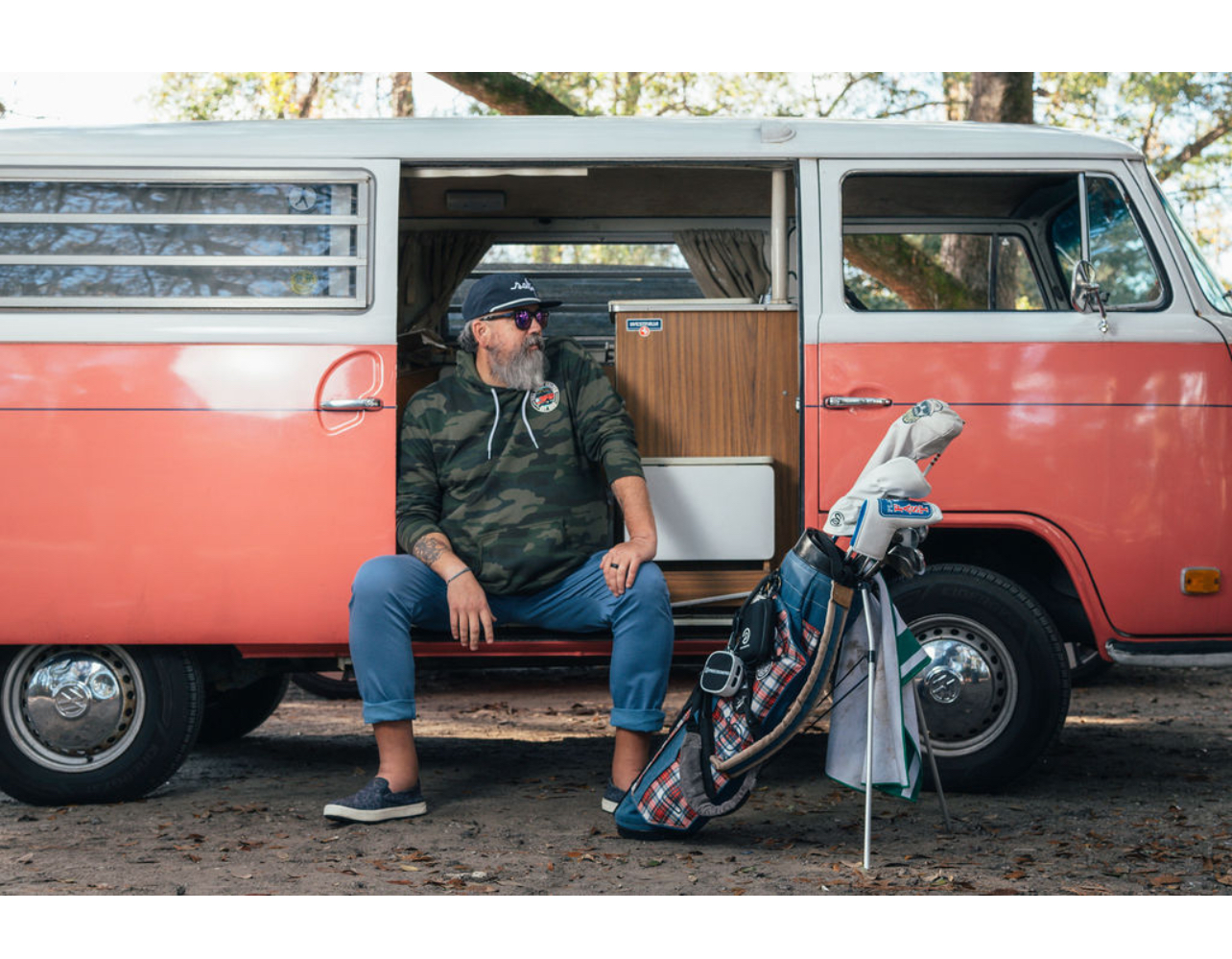
His customers run from sixteen-year-old skate-and-surf kids to sixty-five-year-old country club men who once owned one of those buses. That wide a customer base, he says, means more ways to get things wrong and more ways to get them right.
What he describes is a lot of guesswork. “They’re not decisions. A lot of it’s guesses.”
Next up is a collaboration with Feather and Hide, a small Florida brand, called Golf to the Bone: a skeleton arm holding a weathered flag. And in November, a hoodie in homage to Sublime’s 40oz. to Freedom. His mother worked in the music business and gave him that album on cassette. He says there is a lot of the Salty Golfer in that record.
“We want to be this one gigantic loop that never ends. Your loop could be clothing. Your loop could be surfing. What do you want to do forever?”
What it leaves behind
If it all disappeared tomorrow, he says, he would not want to be remembered for the clothes.
“It wasn’t about the apparel. It was more about the vibe and just bringing people together through the game of golf and the ocean.”
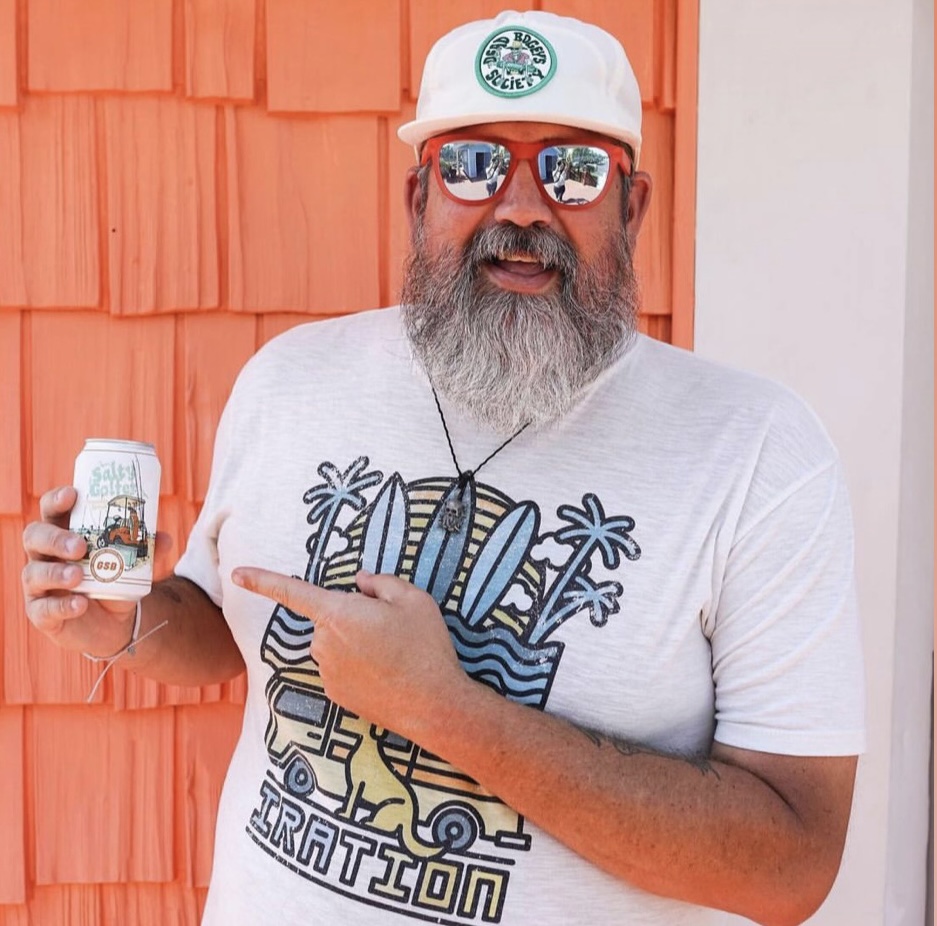
He wants the clothes to take someone away from their day for thirty seconds or five minutes, somewhere that puts a smile on their face.
He quotes a line from the film Rudy: dreams are what make life tolerable.
“If you can turn a dream into reality, you’ll never have a bad day in your life. Now it doesn’t mean there won’t be tough times and hard times. But you will live a full life.”
Then, a beat later, with a grin: “We’re not going anywhere yet. We’re here to stay.”
A few years ago it was a phone, a golf course and three holes on a Friday. Now there is a warehouse, two partners, a 1972 VW bus and a plan for close to fifty pro shops. He is still the one who answers the emails.
Quick fire
Dream playing partner? His granddad, Harold.
Best-dressed golfer of all time? Walter Hagen, and Keith Mitchell of today.
Links or parkland? Not much true links golf around Myrtle Beach. The closest is The Legends, which has a Heathland, a Moorland and a Parkland course.
Masters or Ryder Cup? Masters. “I do love the Ryder Cup though.”
Handicap? 8.4. He has been down to 4.3 and says he doesn’t want to get any better.
Early riser or night owl? Early riser, these days. “The quietness of the mornings, because phones aren’t ringing and people aren’t sending emails.”
The journey so far, in one word? “Thankful.”
Best piece of advice you’ve been given? “The customer is not always right, but they’re always the customer.” (His mum.)
A book worth reading? Heir to a Dream by Pete Maravich, and the Bible.
Drawn from a recorded conversation with Wes Loman in October 2026. Quotes edited for length and clarity.
No payment was made or received for this interview.